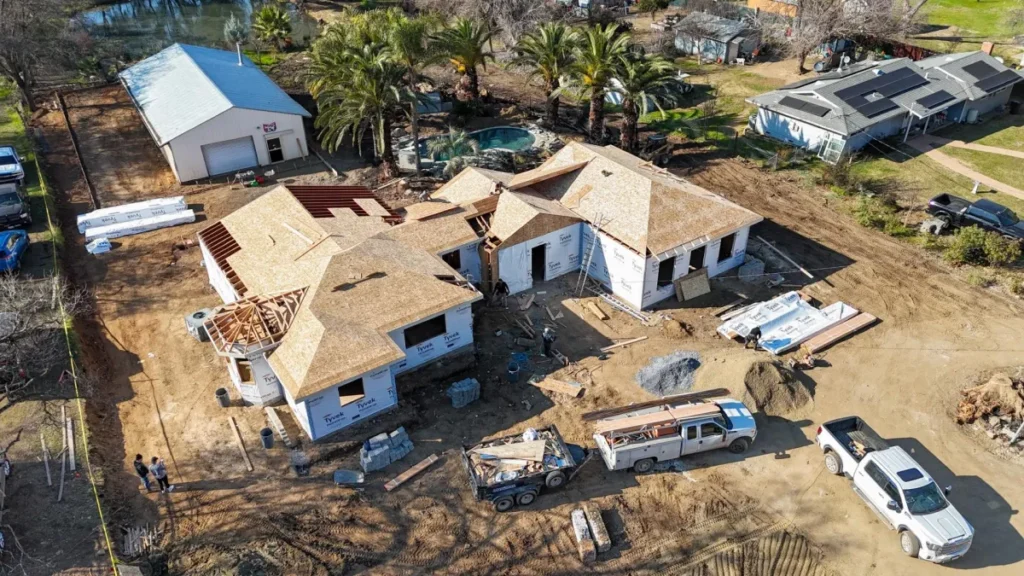
The primary difference between an Attached ADU and a Detached ADU lies in structural integration. An Attached Accessory Dwelling Unit shares at least one wall with the primary residence, while a Detached Accessory Dwelling Unit is a completely separate structure located on the same lot. This structural distinction directly impacts construction cost, privacy level, zoning requirements, and rental potential.
This distinction is critical because local zoning ordinances, building codes, and property valuation standards often treat each structure type differently.
What Is an Attached ADU?
An Attached ADU is a secondary housing unit physically connected to the main house structure. It may share a wall, foundation, roofline, or utility systems with the primary dwelling.
Common examples of an Attached ADU include:
- A garage conversion
- A basement apartment
- A home addition with a private entrance
- An above-garage apartment
Because the unit is integrated into the existing building envelope, construction typically involves modifying or expanding the current footprint. This structural integration often allows for shared utility lines, including electrical, plumbing, and HVAC systems.
From a regulatory standpoint, an Attached ADU is frequently viewed as an extension of the primary dwelling rather than an independent structure. As a result, it may face fewer setback restrictions and lower infrastructure costs compared to detached alternatives.
However, shared structural elements can introduce limitations in sound insulation, privacy separation, and independent design flexibility.
Why do you need Planning and Construction for an Attached ADU with Expert Builders?
An attached ADU requires careful structural integration with the existing home. Load-bearing walls, shared utility systems, and fire separation rules must be evaluated before construction begins. Proper design ensures the new unit blends seamlessly while meeting local building codes.
Working with experienced attached ADU builders Sacramento ensures the project is engineered correctly, permitted efficiently, and completed to high construction standards.
What Is a Detached ADU?
A Detached ADU is a standalone residential unit built separately from the primary home. It has its own walls, foundation, and roof, and is typically located in the backyard or side yard of a residential lot.
Common examples include:
- A backyard cottage
- A carriage house
- A garden suite
- A standalone tiny home
Unlike an attached structure, a Detached ADU requires independent foundation work and often separate utility trenching. In many municipalities, it must meet specific setback requirements, height restrictions, and lot coverage limits.
The defining advantage of a Detached ADU is physical separation. This separation enhances tenant privacy, creates a stronger sense of independent living, and may improve rental market appeal.
However, the additional infrastructure requirements usually increase overall construction expenses and extend the permit approval timeline.
What Is the Key Difference Between an Attached ADU and a Detached ADU?
At a high level, the decision between an Attached ADU and a Detached ADU comes down to five primary factors In a Table:
| Comparison Factor | Attached ADU | Detached ADU |
| Construction Cost Structure | Typically lower due to shared foundation, walls, and utility systems | Higher due to separate foundation construction and independent utility infrastructure |
| Privacy and Lifestyle Considerations | Moderate privacy with shared structural elements | Maximum privacy with fully independent structure |
| Zoning and Permitting Complexity | Often fewer setback constraints and simpler approvals | May face stricter setback requirements, height limits, and placement rules |
| Rental Income Potential | Strong performance with lower upfront investment | Higher rental appeal due to standalone living experience |
| Long-Term Property Value Impact | Adds functional square footage and flexibility | Often perceived as a separate dwelling, increasing resale appeal |
Each factor should be evaluated based on homeowner priorities such as affordability, multigenerational housing needs, or long-term real estate investment strategy.
Attached ADU Cost Breakdown
The total cost of an Attached ADU is typically influenced by the following components:
Shared Structural Elements
Because the unit connects to the primary residence, it may use existing framing, roofing, or load-bearing walls. This reduces the need for new structural engineering and foundation work.
Utility Tie-Ins
An attached unit can often connect to existing plumbing systems, electrical panels, and HVAC infrastructure. These shared connections significantly reduce utility trenching costs and separate meter installation fees.
Lower Site Preparation Costs
Unlike a detached build, an attached structure usually does not require clearing new backyard space or pouring an entirely new slab foundation.
Permit and Inspection Fees
In some jurisdictions, an Attached ADU qualifies for streamlined or ministerial approval, particularly when it remains within the existing footprint of the home.
Despite these advantages, costs can increase if structural reinforcement is required or if the home needs a panel upgrade, sewer capacity expansion, or fire separation modifications.
Detached ADU Cost Breakdown
A Detached ADU typically involves higher upfront investment due to independent construction requirements.
New Foundation Construction
Detached structures require a separate foundation system, whether slab-on-grade, crawlspace, or pier foundation. Foundation work alone can represent a significant portion of total project cost.
Independent Utility Infrastructure
Most detached units require new water lines, sewer lateral connections, and underground electrical trenching. If separate meters are mandated by local code, additional fees apply.
Site Preparation and Landscaping
Backyard grading, tree removal, drainage planning, and driveway access may increase total project costs.
Impact Fees and Development Charges
Some municipalities impose higher impact mitigation fees on detached units because they function more like independent housing structures.
While these expenses raise the initial investment, the enhanced privacy and independence of a Detached ADU may command higher rental rates in competitive housing markets.
Hidden Costs to Consider
Regardless of structure type, homeowners should evaluate potential hidden expenses:
- Architectural design fees
- Structural engineering review
- Energy efficiency compliance
- Fire sprinkler requirements
- Utility capacity upgrades
- Permit expediting services
- Soil testing and geotechnical analysis
Failure to account for these factors can significantly distort a projected construction budget.
Which ADU Type Adds More Property Value?
Both an Attached ADU and a Detached ADU can increase overall property value, but the degree of appreciation depends on buyer demand, rental potential, and local real estate trends.
In many suburban markets, a Detached ADU adds stronger resale appeal because it functions as a more independent living space. Buyers often perceive it as a flexible asset suitable for tenants, extended family members, or guest accommodations.
However, in dense urban neighborhoods with limited lot sizes, a well-designed Attached ADU may be equally valuable due to space efficiency and lower property tax impact.
Appraisal and Market Comparables
Real estate appraisers evaluate Accessory Dwelling Units using several criteria:
- Whether the unit has a separate entrance
- Whether it includes a full kitchen and bathroom
- The level of privacy separation
- Documented rental income history
- Comparable nearby properties with similar structures
A legally permitted Detached ADU with documented rental income may positively influence the income approach valuation method, especially in investment-focused neighborhoods.
An Attached ADU, while sometimes considered part of the main dwelling, still contributes to overall livable square footage and functional versatility.
Buyer Appeal Differences
The impact on buyer demand varies by target demographic:
Multigenerational Families
Households seeking proximity with privacy often prefer a Detached ADU for aging parents or adult children.
Budget-Conscious Buyers
Buyers focused on affordability may appreciate an Attached ADU that reduces overall property taxes and construction complexity.
Real Estate Investors
Investors typically favor units with higher rental income potential, and detached structures often outperform due to stronger tenant appeal.
Zoning Requirements and Permit Differences
The regulatory landscape for Accessory Dwelling Units differs significantly between attached and detached structures. Local zoning regulations, municipal housing policies, and building department guidelines dictate what is permissible.
In general, an Attached ADU may face fewer setback constraints because it extends from the existing residence. Conversely, a Detached ADU must comply with stricter placement rules to maintain neighborhood spacing and access requirements.
Setback Requirements
Detached units typically require minimum distances from rear and side property lines. Attached units often inherit the primary dwelling’s setback positioning.
Height Restrictions
Municipal codes may limit detached structures to a maximum height to preserve neighborhood character.
Lot Coverage Limits
Both structure types must comply with floor area ratio regulations, but detached builds more directly affect total lot coverage.
Parking Requirements
Some cities mandate additional off-street parking for new ADUs, particularly detached units.
Owner-Occupancy Rules
Certain jurisdictions require the homeowner to reside in either the primary dwelling or the Accessory Dwelling Unit.
Fire and Safety Compliance
Detached structures often require upgraded fire separation standards, especially if built near property lines.
Privacy Differences Between an Attached ADU and a Detached ADU
| Privacy Factor | Attached ADU | Detached ADU |
| Structural Separation | Shares at least one wall, roofline, or foundation with the primary residence | Fully independent structure with no shared walls |
| Noise Transmission | Higher potential for sound transfer through shared framing and walls | Minimal structural noise transfer due to complete separation |
| Outdoor Space Access | May share driveway, yard space, or entry pathways | Typically includes separate walkway or designated yard area |
| Visual Privacy | Closer proximity to main home reduces visual separation | Greater distance from primary dwelling enhances visual independence |
| Tenant Appeal | Suitable for family members or close occupants | Stronger appeal for unrelated tenants seeking standalone living |
| Lifestyle Independence | Semi-independent living environment | Fully independent living experience |
A Detached ADU generally provides higher overall privacy due to structural and spatial separation. An Attached ADU, however, may offer sufficient privacy for multigenerational households where proximity is beneficial.
Attached ADU Privacy Considerations
An Attached ADU shares at least one wall, roofline, or foundation with the main home. This structural connection creates certain lifestyle trade-offs.
Shared Wall Noise Transfer
Even with modern insulation and soundproofing materials, shared framing systems can transmit vibration and airborne noise. Footsteps, plumbing sounds, or household activity may be partially audible between units.
Proximity to the Main Residence
Because the unit is physically connected, outdoor space such as patios, driveways, and entryways may be shared or closely positioned. This reduces the sense of full independence.
Accessibility Advantages
For multigenerational households, proximity is often beneficial. An Attached ADU makes caregiving and daily interaction easier while still offering a degree of autonomy.
Detached ADU Privacy Advantages
A Detached ADU is completely separated from the primary dwelling, typically located in the backyard or side yard.
Independent Living Environment
Because it stands alone, tenants or family members experience a true sense of separation. There are no shared structural walls, which significantly reduces sound transmission.
Separate Outdoor Access
Most detached units feature dedicated walkways or private yard sections, increasing perceived independence.
Stronger Tenant Appeal
In competitive rental markets, privacy is a premium feature. A Detached ADU often commands higher rental rates due to its standalone character.
Best ADU Type for Multigenerational Living
Choosing between an Attached ADU and a Detached ADU for multigenerational households depends on desired proximity.
Aging in Place Solutions
An Attached ADU allows aging parents to remain close for support while maintaining a separate sleeping and living area.
Adult Children or Extended Family
A Detached ADU may be preferable when long-term independence is important, particularly for adult children or relatives seeking autonomy.
Balance Between Independence and Access
Households seeking frequent interaction may benefit from an attached configuration, while those prioritizing privacy typically lean toward a detached structure.
Rental Income and ROI Comparison
From an investment perspective, both an Attached ADU and a Detached ADU can generate meaningful rental income. The difference lies in pricing power, occupancy rates, and long-term appreciation.
A detached structure often commands higher monthly rent due to stronger privacy appeal. However, the higher upfront construction cost may lengthen the payback period.
Long-Term Rental Income Potential
In most suburban and urban rental markets:
- A Detached ADU may achieve premium rental pricing because tenants perceive it as a standalone home.
- An Attached ADU may rent slightly below detached rates but still performs strongly due to lower development costs.
Rental performance ultimately depends on location quality, unit size, and local housing demand.
Short Term Rental Regulations
Short-term rental viability depends heavily on municipal housing regulations.
Some cities restrict short-term rentals in Accessory Dwelling Units, particularly detached structures. Others impose owner-occupancy requirements that limit flexibility.
Cap Rate and Return on Investment
The return on investment for an ADU depends on three primary variables:
- Total construction cost
- Annual rental income
- Long-term property value appreciation
Because an Attached ADU typically costs less to build, it may deliver a shorter payback period even if monthly rent is lower. Conversely, a Detached ADU may produce stronger long-term income but require a larger capital investment.
Financing Options for ADU Construction
Homeowners often finance ADU projects through:
- A Home Equity Line of Credit
- A cash-out refinance
- A construction loan
- Specialized ADU financing programs
Lenders may evaluate projected rental income differently depending on whether the unit is attached or detached. Detached units that function more independently may be assessed as stronger income-generating assets.
Payback Period Analysis
The payback period for an Attached ADU is often shorter because of lower construction costs and shared infrastructure.
A Detached ADU, while more expensive initially, may outperform over time if rental income is significantly higher. Investors must compare total capital expenditure against projected annual net income.
Lot Size and Space Requirements
Lot size plays a critical role in determining feasibility. A Detached ADU requires adequate yard space to meet setback and coverage requirements, while an Attached ADU may be feasible even on smaller lots.
Understanding floor area ratio limits and lot coverage restrictions is essential before committing to design plans.
Minimum Lot Size Considerations
Some municipalities establish minimum lot size thresholds for detached structures. Smaller urban parcels may restrict the maximum allowable square footage of a detached unit.
An Attached ADU, particularly one created through interior conversion, is often more adaptable to compact properties.
Floor Area Ratio Limits
The floor area ratio determines how much total building square footage is allowed relative to lot size.
A detached structure adds to total lot coverage more directly, potentially limiting expansion flexibility. Attached units often integrate more efficiently within existing square footage allowances.
Urban vs Suburban Property Differences
Urban properties frequently face tighter lot constraints but may offer stronger rental demand. Suburban lots typically provide more backyard space for detached construction.
Choosing between an Attached ADU and a Detached ADU often depends on balancing physical space with market opportunity.
Pros and Cons of an Attached ADU
Advantages of an Attached ADU
- Lower overall construction cost
- Reduced utility installation expenses
- Faster build timeline in many cases
- Easier integration into existing structure
Disadvantages of an Attached ADU
- Reduced privacy separation
- Potential noise transmission
- Limited design independence
- Possible structural reinforcement requirements
Pros and Cons of a Detached ADU
Advantages of a Detached ADU
- Maximum privacy
- Strong tenant appeal
- Independent design flexibility
- Clear separation from primary residence
Disadvantages of a Detached ADU
- Higher upfront construction expenses
- Increased infrastructure requirements
- More complex zoning compliance
- Longer permit approval timeline
How to Choose Between an Attached ADU and a Detached ADU
Choosing between an attached or detached ADU requires careful planning and professional guidance. Design feasibility, zoning rules, and construction costs must align with your long-term goals. In addition, proper site evaluation ensures the unit meets safety codes and rental expectations.
Partnering with trusted attached ADU builders Sacramento or experienced detached ADU builders Sacramento ca helps ensure your project is structurally sound, code-compliant, and optimized for both livability and long-term property value. helps ensure your project is structurally sound, code-compliant, and optimized for both livability and long-term property value.
Best Option for Budget Conscious Homeowners
If minimizing upfront capital is your primary concern, an Attached ADU is often the more practical solution.
Because it leverages existing structural systems and shared utility infrastructure, it typically reduces total development cost. Lower foundation expenses, fewer utility trenching requirements, and potential eligibility for streamlined permit approval can significantly shorten both cost and construction timelines.
For homeowners seeking incremental property improvement without extensive backyard development, an attached configuration usually presents fewer financial barriers.
Best Option for Maximum Rental Income
If your objective is optimizing long-term rental yield, a Detached ADU often delivers stronger pricing power.
Tenants generally perceive a detached unit as a standalone home rather than an extension of the primary dwelling. This increased privacy can justify higher monthly rent and may improve tenant retention rates.
However, investors must weigh premium rental potential against the higher initial construction investment and longer payback period.
Best Option for Multigenerational Living
For families planning multigenerational housing arrangements, the choice depends on desired proximity.
An Attached ADU supports closer interaction and simplified caregiving access. This configuration is often preferred for aging parents who require periodic assistance but still value autonomy.
A Detached ADU provides greater independence for adult children or extended relatives who intend to live long-term on the property while maintaining privacy boundaries.
Best Option for Increasing Property Value
Both structure types can increase residential property value, but buyer perception varies by market.
In high-density urban areas, a well-designed Attached ADU may maximize usable space within tight lot limits. In suburban markets with larger parcels, a legally permitted Detached ADU often enhances resale appeal due to its independent living functionality.
The impact on value ultimately depends on local real estate demand, comparable properties, and the quality of design and construction.
Best Option for Limited Lot Size
Lot configuration can determine feasibility before cost becomes relevant.
If your property has limited backyard depth or restrictive setback requirements, an Attached ADU created through interior conversion or structural addition may be the only viable option.
A Detached ADU requires sufficient yard space to comply with lot coverage rules, rear setbacks, and height restrictions. Without adequate land area, detached construction may not be permitted.
Frequently Asked Questions
Does a Detached ADU Increase Property Taxes More?A Detached ADU does not automatically trigger higher property taxes solely due to structure type. Property tax reassessment is generally based on the added assessed value from improvements. Because detached units often cost more to build, they may increase total property valuation more than an attached configuration.
Can You Sell a Detached ADU Separately?In most jurisdictions, a Detached ADU cannot be sold separately from the primary residence because it sits on the same legal parcel. Separate sale typically requires a formal lot subdivision or condominium conversion, both of which are subject to strict local approval processes.
Are Detached ADUs Harder to Get Approved?Approval complexity depends on local zoning regulations. A Detached ADU may face stricter setback rules, height limits, and lot coverage constraints, making the design process more detailed. However, many municipalities have streamlined approval pathways to encourage accessory housing development.
Do Attached ADUs Require Separate Utility Meters?An Attached ADU does not always require separate meters. Many jurisdictions allow shared utility connections, especially when the unit remains structurally integrated. Detached units are more likely to require independent utility infrastructure depending on municipal code.
Which ADU Type Rents Faster?Rental speed depends on market demand, but a Detached ADU often attracts tenants seeking standalone housing privacy. An Attached ADU can still perform strongly in high-demand areas, particularly when rental pricing is competitive.
Is an Attached ADU Considered Part of the Main House?An Attached ADU is structurally connected to the primary residence but remains legally classified as an Accessory Dwelling Unit if it includes independent living facilities such as a kitchen, bathroom, and private entrance. Local building departments define classification standards.